Description of execution
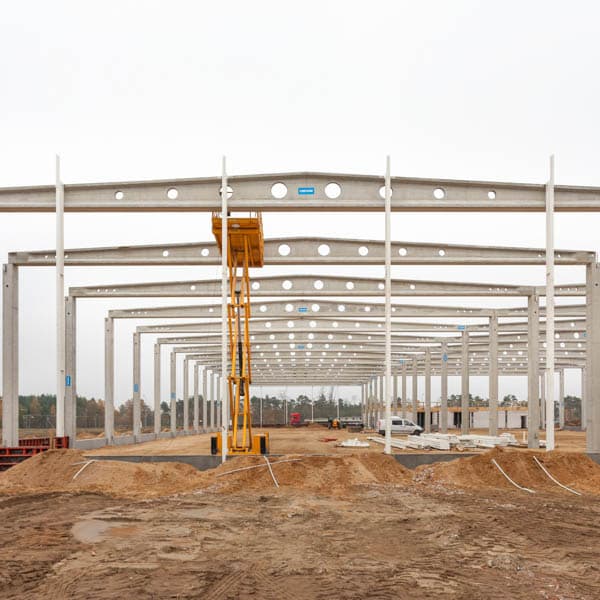
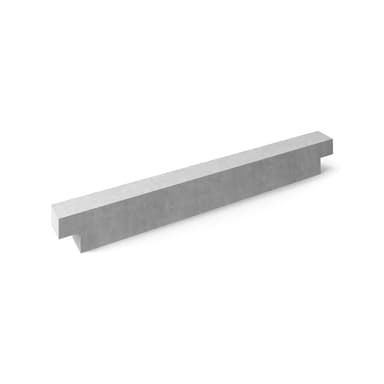
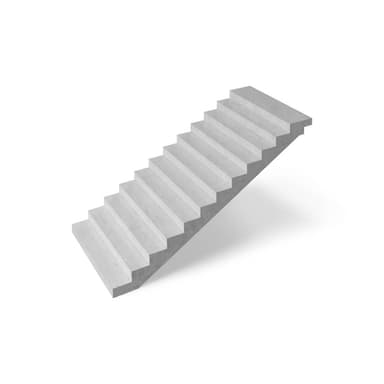
Our prefabricated elements were used for the expansion of the Bridgestone tyre factory in Poznań. This was part of the 40K project, which Bridgestone has been implementing since 2017 to increase production capacity. This was our second construction job within the scope of this project. We have now supplied and designed prefabricated elements for the construction of two buildings for the Poznań branch of Projprzem sp. z o.o.: a raw tyre warehouse (MOS) and a curing hall. The scope of the order included: workshop design, production and assembly of nearly 200 reinforced concrete prefabricated elements; columns, beams and staircase elements.
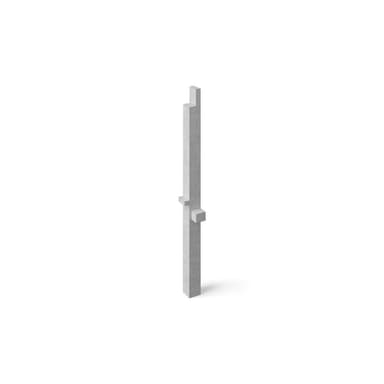
The most interesting part of the contract was the production and assembly of 44 columns for the MOS building, which included:
- 27 columns with cross-sections of 90×110 cm, a height of 28.62 m, a volume of 27.2 m3 and a weight of 68 tonnes
- 8 columns with cross-sections of 100×110 cm, height of 28.62 m, volume of 30.2 m3 and weight of 75.6 tonnes
- 9 columns with cross-sections 110×110 cm, height 28.62 m, volume 33.7 m3 and weight 84.1 tonnes
The weight of the reinforcement of a single column ranged from 6.5 tonnes to 8.6 tonnes. An additional difficulty was the necessity to use anti-shrinkage meshes in columns with increased fire resistance R240. The main reinforcement was made of the largest reinforcing bars available on the market, with a diameter of 32 mm.
The columns had 4 brackets each for mounting two levels of beams bracing the entire structure. The connection to the foundation slab was made using Peikko column supports. We concreted 16 Peikko PEC39 column bases in the columns. In the columns up to a height of approx. 6 metres, we concreted bent reinforcement for connection to the monolithic wall, and above that JTA rails for connection to aerated concrete blocks. The concrete grade used was C40/50.
Due to the fact that our scope was limited to the execution of a workshop design, it was very important to check the columns for the demoulding, transport and assembly phase. It turned out that some of the columns required additional reinforcement only for this initial phase of the prefabricated elements' work.
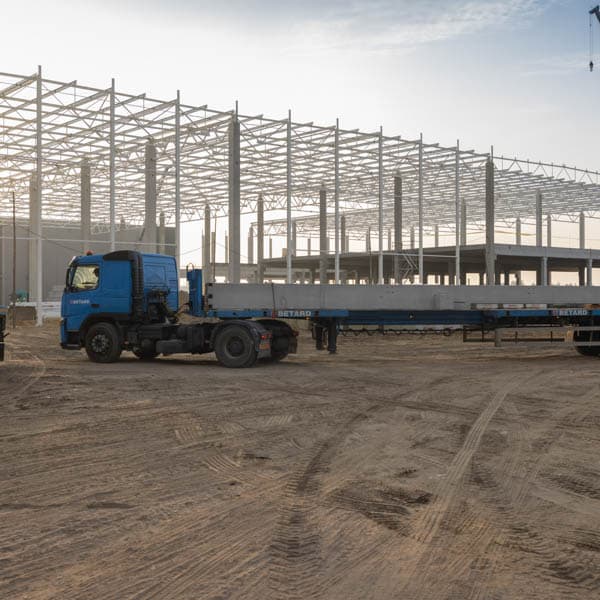
The columns were manufactured using three moulds: two hydraulic steel moulds and one made of system formwork elements. At the peak of production, we were manufacturing 6 columns per week. Thanks to the use of concretes that quickly increase their strength, we were able to remove the prefabricated elements from the mould as early as three days after concreting and send them to the construction site. We used hooks made of prestressed steel strands to lift the prefabricated elements.
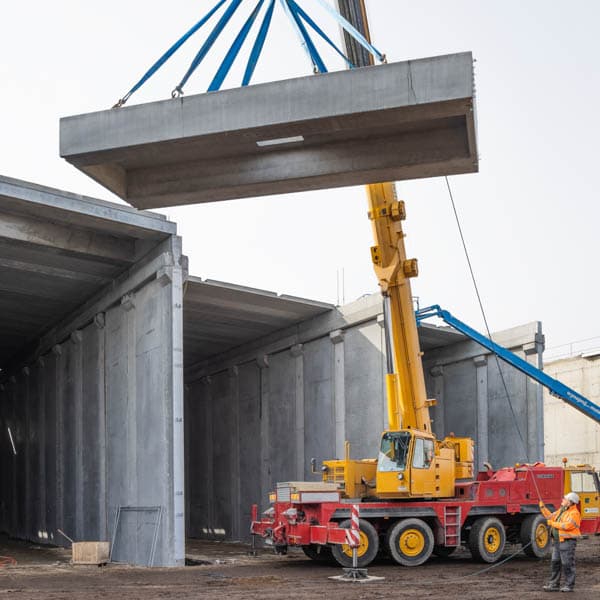
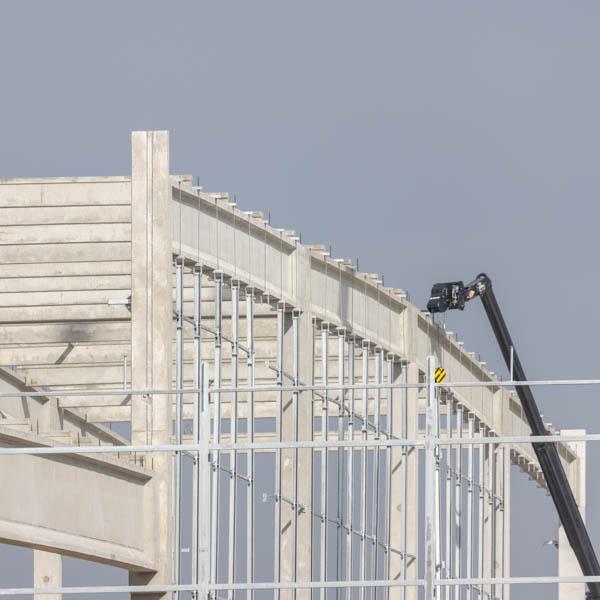
Wheeled cranes with a lifting capacity of 350 and 400 tonnes were used for installation. Four to five columns were installed per day. For columns with fire resistance class R240, we made an additional band made of grouting material to secure the connection between the column and the foundation slab. Reinforced concrete beams were installed on the columns at heights of 16 and 26 metres to brace the structure. The connection between the beam and the column was additionally sealed to fire resistance EI240 using Hilti systems.